Treatments
ACL Reconstruction
Arthroscopic keyhole surgery that rebuilds your torn ACL and puts a stable knee back under you.
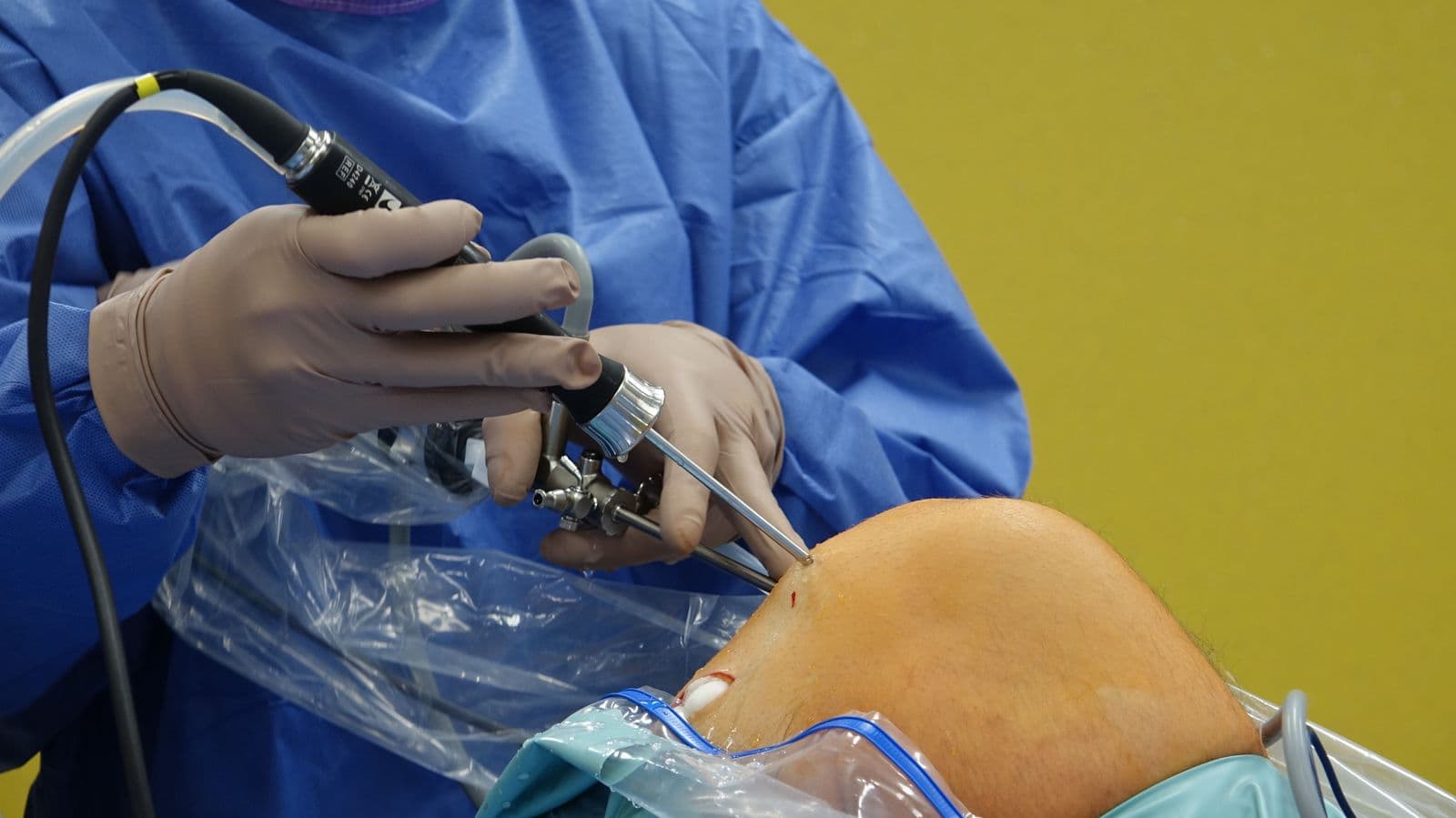
Understanding the procedure
The anterior cruciate ligament (ACL) is the main stabiliser of the knee during cutting, pivoting and jumping. It commonly tears during sport, often with a pop, immediate swelling and a knee that no longer feels trustworthy. A torn ACL cannot stitch itself back together, so reconstruction replaces it with a graft of your own tendon, passed through precise bone tunnels and fixed until it heals into a new, living ligament.
Dr. Manish Saini performs arthroscopic ACL reconstruction in Surat through keyhole incisions, addressing meniscus and cartilage injuries in the same sitting when present. Fellowship training in sports medicine, including the FIFA diploma programme, informs both the surgical technique and the criteria-based rehabilitation that carries an athlete safely back to sport.
When to take a knee injury seriously
If several of these sound familiar, it is worth a proper assessment. Naming the problem early keeps more options open.
A pop felt or heard in the knee at the moment of injury
Rapid swelling within hours of the injury
The knee giving way during turning or twisting movements
A feeling of looseness or not trusting the knee
Difficulty returning to running or sport after the swelling settles
Recurrent episodes of the knee buckling
Pain or catching along the joint line, suggesting meniscus injury
Is it the right time?
Surgery is offered only when it is clearly the better path. These are the signs that usually tip the balance.
MRI confirms a complete ACL tear in an active person who wants to run, pivot or play sport.
The knee gives way during daily activities, not just on the field.
An associated meniscus or cartilage injury needs repair alongside the ligament.
Instability persists despite a dedicated trial of rehabilitation.
Your work or lifestyle demands a knee that can be trusted on uneven ground.
Your treatment options
Non-surgical care always comes first. Surgery enters the conversation only when simpler measures no longer control your symptoms.
Structured rehabilitation alone
Where treatment begins
For less active patients with an isolated tear and a stable-feeling knee, a supervised strengthening programme can restore enough control for everyday life without surgery. Regular review guards against silent giving-way episodes.
Bracing and activity modification
A functional knee brace and avoiding pivoting sports can be a reasonable interim plan while you decide about surgery, or a long-term one for low-demand knees.
Arthroscopic ACL reconstruction
The torn ligament is replaced with a graft, usually from your hamstring or quadriceps tendon, through keyhole incisions. It is the reliable route back to cutting and pivoting sport.
Combined ligament and meniscus surgery
When the meniscus or other ligaments are injured too, everything is addressed in one arthroscopic procedure, because a preserved meniscus is the knee's best protection against future arthritis.
What this treatment changes
The outcomes that matter to patients, stated plainly.
A stable knee again
Reconstruction restores the front-to-back and rotational control that a torn ACL takes away.
Protection for the meniscus
Stabilising the knee reduces repeat giving-way episodes, each of which risks fresh meniscus and cartilage damage.
A route back to sport
With criteria-based rehabilitation, most athletes return to their sport, typically between 9 and 12 months.
Keyhole surgery
Small incisions, a camera-guided technique and day-care or overnight admission for most patients.
Everything fixed in one sitting
Meniscus repair and cartilage treatment are combined with the reconstruction whenever they are needed.
Recovery
Your road back, phase by phase
Every recovery is individual. These are the typical milestones patients can expect, reviewed together at each follow-up.
Week 0-2
Settle and protect
Walking with crutches, controlling swelling and waking the quadriceps up. Full knee extension is the first milestone.
Week 2-6
Range and control
Crutches are set aside, knee bend is restored and stationary cycling begins. The graft is protected while it heals into the bone tunnels.
Month 2-4
Strength
Progressive gym-based strengthening of the thigh, hip and calf. Straight-line jogging usually begins around month 3.
Month 4-8
Power and agility
Running builds to sprinting, then hopping, cutting and sport-specific drills, each unlocked by objective strength tests.
Month 9-12
Return to sport
Full training and competition resume once strength, hop tests and confidence meet return-to-play criteria, typically from month 9 onwards.
Questions patients ask
Honest answers to the questions raised most often in the clinic.
Related treatments
Discuss ACL reconstruction with Dr. Saini.
A careful examination, an honest opinion and a plan you understand. OPD hours: Mon to Sat, 10:00 AM to 1:00 PM and 5:00 PM to 8:00 PM.