Treatments
Arthroscopy
Keyhole surgery for knee and shoulder problems: see inside the joint, fix the cause, go home the same day.
Understanding the procedure
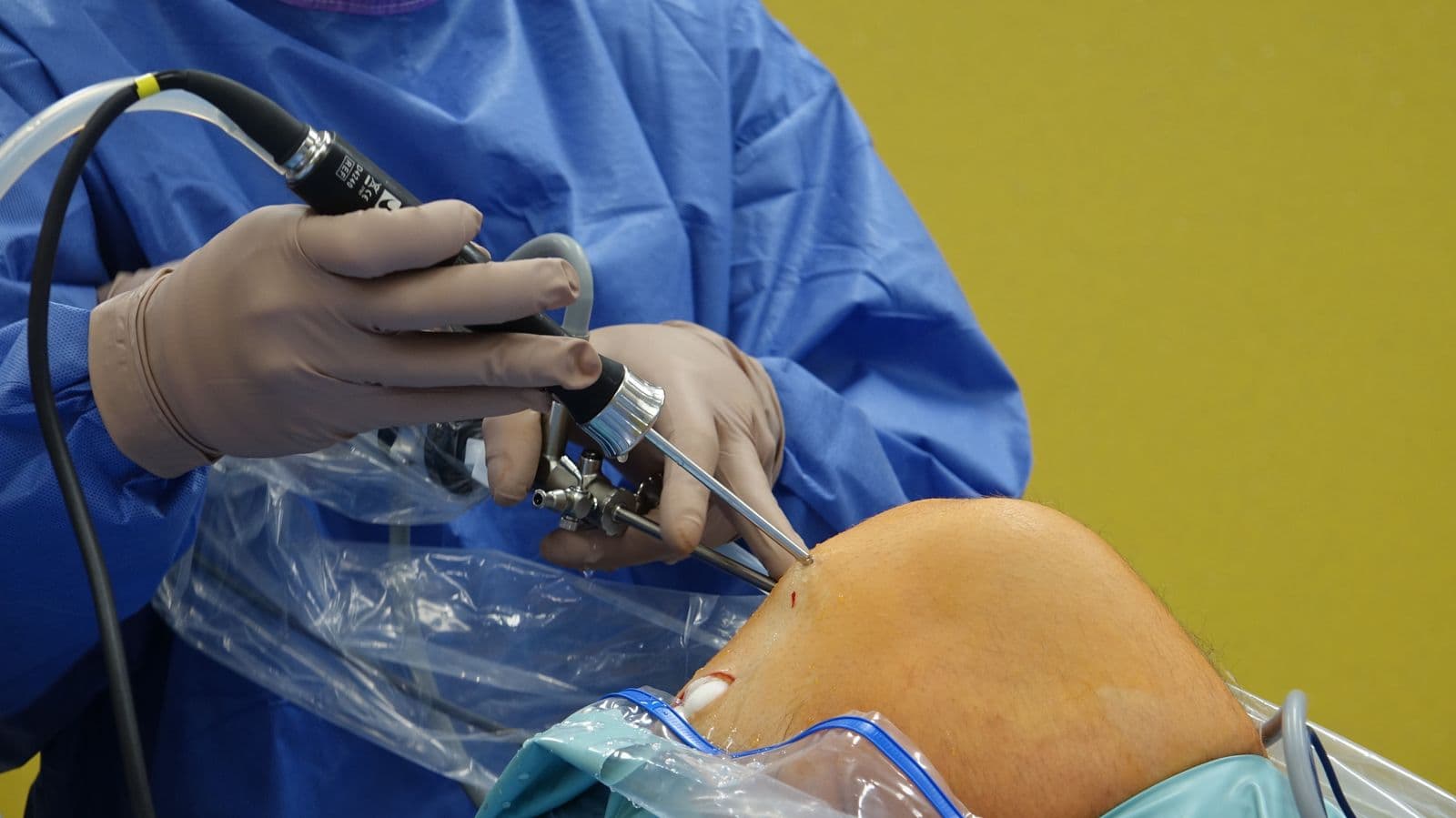
Arthroscopy is keyhole surgery of the joints. Through incisions of a few millimetres, a high-definition camera and fine instruments enter the joint, letting the surgeon see every surface directly and treat the problem in the same sitting. In the knee, arthroscopy treats meniscus tears, ligament injuries, cartilage damage and loose bodies. In the shoulder, it repairs rotator cuff tears, treats recurrent dislocation by repairing the labrum, and releases frozen shoulders that have failed to respond to therapy.
Because the joint is not opened, arthroscopy causes far less tissue damage than traditional surgery: less pain, minimal scarring, day-care discharge for most patients and an earlier return to work and sport. Dr. Manish Saini has advanced arthroscopy training and performs these procedures routinely in Surat, always after non-surgical options have had a fair trial.
When to take joint symptoms seriously
If several of these sound familiar, it is worth a proper assessment. Naming the problem early keeps more options open.
Catching, clicking or locking inside the knee
Joint-line pain after a twisting injury, suggesting a meniscus tear
A knee or shoulder that swells repeatedly with activity
Recurrent shoulder dislocation or a feeling that it may slip out
Night pain and weakness suggesting a rotator cuff tear
A stiff, frozen shoulder that has plateaued despite physiotherapy
A sensation of something loose moving within the joint
Is it the right time?
Surgery is offered only when it is clearly the better path. These are the signs that usually tip the balance.
MRI shows a meniscus tear, labral tear or rotator cuff tear that is causing mechanical symptoms.
The joint locks, catches or repeatedly swells, pointing to a mechanical problem inside.
A shoulder has dislocated more than once, and each episode raises the risk of the next.
Symptoms persist despite an adequate course of physiotherapy and medication.
A precise look inside the joint is needed where scans leave genuine doubt.
Your treatment options
Non-surgical care always comes first. Surgery enters the conversation only when simpler measures no longer control your symptoms.
Physiotherapy and medication
Where treatment begins
Many meniscus tears, early cuff problems and most frozen shoulders improve with structured therapy, medication and time. Surgery is considered only when this path has genuinely been tried.
Targeted injections
Image-guided injections can settle inflammation in the shoulder or knee, relieving pain and making rehabilitation possible. For frozen shoulder, hydrodilatation can restore motion without surgery.
Arthroscopic repair
Meniscus repair, rotator cuff repair and labral (Bankart) repair for shoulder instability preserve and fix your own tissue through keyhole incisions, protecting the long-term health of the joint.
Arthroscopic debridement and release
Removing loose bodies, trimming irreparable tissue and releasing a resistant frozen shoulder restore smooth, comfortable movement when repair is not what the joint needs.
What this treatment changes
The outcomes that matter to patients, stated plainly.
Minimal incisions
Cuts of a few millimetres instead of an open joint mean less pain, minimal scarring and a low infection risk.
Day-care surgery
Most arthroscopic procedures allow you to walk and go home the same day.
Diagnosis and treatment together
The camera confirms exactly what is wrong and the problem is treated in the same sitting.
Faster return to life
Desk work often resumes within days to 2 weeks, with sport following a structured progression.
Joint preservation
Repairing menisci, labrum and cuff tissue protects the joint against instability and early arthritis.
Recovery
Your road back, phase by phase
Every recovery is individual. These are the typical milestones patients can expect, reviewed together at each follow-up.
Day 0-1
Day of surgery
Most patients walk within hours of knee arthroscopy and go home the same day with simple dressings and clear instructions.
Week 1
First week
Swelling is managed with ice and elevation, wounds stay dry, and gentle prescribed exercises begin immediately.
Week 2-4
Early rehabilitation
Motion and strength build steadily. Desk work is usually comfortable in this window; repairs are protected per protocol.
Week 4-8
Progressive loading
Strengthening advances and daily life returns to normal. Simple debridement procedures are largely recovered by now.
Month 2-6
Return to sport
Timelines diverge by procedure: simple arthroscopy allows sport within around 2 months, while meniscus and cuff repairs are protected for 3-6 months.
Questions patients ask
Honest answers to the questions raised most often in the clinic.
Related treatments
Discuss arthroscopy with Dr. Saini.
A careful examination, an honest opinion and a plan you understand. OPD hours: Mon to Sat, 10:00 AM to 1:00 PM and 5:00 PM to 8:00 PM.